Flat Tire on Circle Drive? Emergency Tire Change Service in Saskatoon
You’re driving down Circle Drive or heading through downtown Saskatoon when you hear that unmistakable thump-thump-thump sound. Your tire pressure light flashes on the dashboard, and suddenly your car feels sluggish and unbalanced. You’ve got a flat tire—and you’re stuck on the side of the road. Whether it’s a nail puncture, blown sidewall, or winter road damage, getting a flat is frustrating and inconvenient. The good news? Professional tire change service in Saskatoon brings help directly to you—fast, safe, and affordable. Here’s exactly what to expect when you call for emergency roadside tire assistance.
Why Flat Tires Happen More Often in Saskatoon
Saskatchewan roads are tough on tires. Winter brings potholes, ice damage, and debris hidden under snow that punctures sidewalls and treads without warning. Construction zones scatter nails, screws, and sharp metal fragments across highways and city streets. Temperature swings cause tire pressure fluctuations—cold air contracts and reduces PSI, increasing the risk of blowouts or sidewall failures. Even well-maintained tires can fail suddenly when they hit a curb, pothole, or sharp object at speed. Flat tires aren’t just bad luck—they’re an inevitable part of driving in Saskatoon’s harsh climate.
Step 1: Pull Over Safely and Assess the Situation
The moment you suspect a flat tire, slow down gradually and pull over to the safest spot possible. Avoid slamming on the brakes or making sharp turns, which can damage your wheel rim or cause loss of control. If you’re on a busy road like Idylwyld Drive or Highway 16, try to reach a parking lot, rest area, or wide shoulder away from traffic. Turn on your hazard lights immediately to alert other drivers. Once stopped, stay inside your vehicle if traffic is heavy—it’s safer inside than standing on the roadside shoulder.
Step 2: Call for Professional Tire Change Service
Once you’re safely pulled over, call roadside assistance or a mobile tire service. Provide your exact location using GPS coordinates or nearby landmarks (street names, businesses, highway markers). Describe the tire issue—is it completely flat, partially deflated, or blown out? Let the dispatcher know if you have a spare tire in your vehicle and if it’s accessible. Most Saskatoon tire change services arrive within 20 to 40 minutes depending on your location and traffic conditions. You’ll receive real-time ETA updates via text or phone.
Step 3: Stay Safe While Waiting for Help
While waiting for the technician to arrive, prioritize safety. Stay inside your locked vehicle if you’re on a busy highway or during severe weather. Turn on hazard lights and keep your phone charged. If you’re in a parking lot or safe area during daylight, you can exit and inspect the flat tire—but never attempt repairs on the roadside shoulder in traffic. Avoid standing behind or directly in front of your vehicle where passing cars could strike you. In winter, dress warmly and stay inside to avoid exposure to extreme cold while waiting.
Step 4: The Technician Arrives and Assesses Your Tire
When the mobile tire service technician reaches you, they’ll inspect your flat tire to determine the cause and assess whether you need a tire change using your spare or if towing is required. They’ll check for visible punctures, sidewall damage, or rim damage, verify your spare tire’s condition and air pressure, confirm your vehicle is safely positioned and stable, and gather the necessary tools (jack, lug wrench, torque wrench). If your spare tire is functional and properly inflated, they’ll proceed with the tire change on-site. If your spare is missing, damaged, or flat, they’ll recommend towing to a nearby tire shop.
Step 5: Professional Tire Change Process
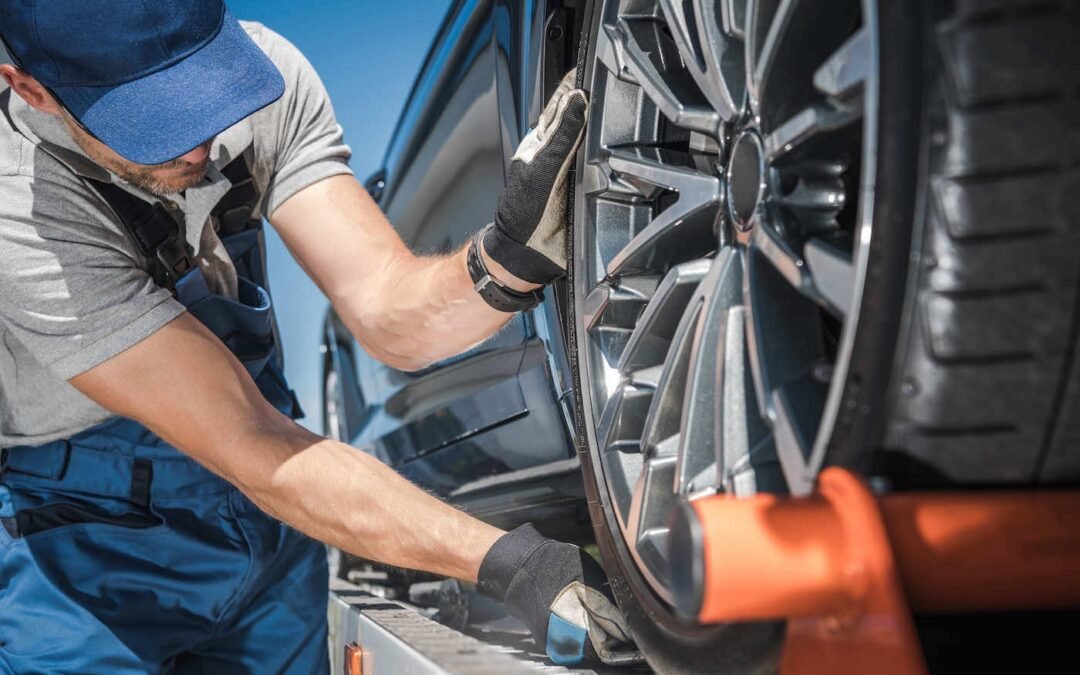
Mobile tire change technicians follow a standardized process to ensure safe, damage-free service. First, they place wheel chocks behind the opposite tires to prevent rolling. Next, they loosen the lug nuts slightly while the tire is still on the ground. Then they position the hydraulic jack under the manufacturer-recommended lift point and raise the vehicle. After that, they remove the lug nuts completely and pull off the flat tire. They mount your spare tire onto the wheel hub and hand-tighten the lug nuts. They lower the vehicle until the spare tire touches the ground, then use a torque wrench to tighten lug nuts to manufacturer specifications in a star pattern. Finally, they fully lower the vehicle and remove the jack. The entire process takes 15 to 25 minutes for standard vehicles.
What If You Don’t Have a Spare Tire?
Many modern vehicles—especially compact cars, hybrids, and electric vehicles—don’t come with spare tires. Instead, they include tire repair kits or run-flat tires. If you don’t have a spare and your tire is damaged beyond roadside repair, you’ll need breakdown towing to transport your vehicle to a tire shop. Mobile technicians can temporarily inflate your tire using sealant and air compressors if the puncture is small and located in the tread (not the sidewall). This temporary fix gets you to a tire shop safely, but it’s not a permanent solution.
Temporary Spare Tires (Donuts): What You Need to Know
If your vehicle has a temporary spare tire—also called a “donut”—it’s smaller and lighter than your regular tires. These spares are designed for emergency use only, with strict limitations. Drive no faster than 80 km/h, travel no more than 80-100 kilometers before replacement, avoid highway driving if possible, and don’t carry heavy loads or multiple passengers. Temporary spares have less tread depth and different handling characteristics, so drive cautiously and head directly to a tire shop for a permanent replacement. Never use a donut spare for extended periods.
Full-Size Spare Tires: Can You Drive Normally?
If your vehicle has a full-size spare tire that matches your other tires, you can drive normally after it’s installed—with one caveat. Check the spare’s air pressure immediately. Spare tires often sit unused for years and may have low pressure. Inflate to the recommended PSI listed on your driver’s side door jamb. Even with a full-size spare, visit a tire shop soon to repair or replace your damaged tire. Driving long-term on a mismatched spare (even full-size) can affect handling, traction, and all-wheel drive systems.
Run-Flat Tires: Do You Still Need a Tire Change?
Run-flat tires are designed with reinforced sidewalls that support your vehicle’s weight even when deflated. If you have run-flats and get a puncture, you can usually drive 50 to 80 kilometers at reduced speed (80 km/h maximum) to reach a tire shop. However, once a run-flat tire loses pressure, it must be replaced—repairs aren’t recommended. If you’re unsure whether your tires are run-flats, check the sidewall markings for codes like RFT (Run-Flat Technology), ZP (Zero Pressure), or SSR (Self-Supporting Run-flat). When in doubt, call professional tire service for guidance.
How Much Does Emergency Tire Change Cost in Saskatoon?
Professional roadside tire change services in Saskatoon typically cost between $80 and $110 for standard vehicles during regular hours. This includes travel to your location, labor to remove the flat and install your spare, torqueing lug nuts to spec, and disposal of the flat tire if requested. After-hours service (late nights, weekends, holidays) may add $20 to $40 to the base price. If you don’t have a spare or your spare is damaged, towing to a tire shop starts at an additional $100 to $150. Reputable services provide upfront pricing during dispatch—no surprises.
Is Tire Change Service Covered by Insurance?
Many auto insurance policies and roadside assistance programs include tire change coverage. Check your insurance policy, CAA membership, or credit card benefits—many offer free or discounted roadside tire assistance up to a certain limit per year (typically $75 to $150 per incident). If covered, the mobile tire service can bill your provider directly and handle the paperwork. Even without coverage, paying $80 to $110 for professional service beats risking injury or damaging your vehicle attempting a DIY change on the roadside.
Can You Change a Flat Tire Yourself?
Yes—if you have the right tools, a safe location, physical ability, and confidence. However, changing tires on busy roadsides is dangerous. You’re exposed to passing traffic, heavy jacks can slip and cause injury, improperly torqued lug nuts can cause wheel detachment while driving, and working in extreme heat or cold creates health risks. If you’re on a highway shoulder, in winter weather, or unsure of the process, calling professional mobile tire service is safer, faster, and worth the cost. Save DIY tire changes for driveways and parking lots—not roadside emergencies.
What Happens to Your Flat Tire After the Change?
After installing your spare, the technician can load your flat tire into your trunk so you can take it to a tire shop for repair or replacement. Some mobile services offer flat tire disposal if you don’t want to transport it. If the puncture is small and located in the tread (not the sidewall), many tire shops can patch or plug it for $20 to $40. If the tire is badly damaged, has sidewall punctures, or the tread is worn below safe levels, you’ll need a full replacement. Keep your flat tire until a professional inspects it—you might save money with a simple repair.
Preventing Future Flat Tires
While you can’t eliminate flat tire risk entirely, you can reduce it significantly. Check tire pressure monthly and before long trips—underinflated tires are more prone to punctures and blowouts. Inspect tread depth using the penny test (insert a penny into the tread with Lincoln’s head upside down; if you see the top of his head, replace the tire). Rotate tires every 8,000 to 10,000 kilometers to ensure even wear. Avoid potholes, construction debris, and sharp road hazards when possible. Replace tires once tread depth reaches 4/32 of an inch or if they’re more than six years old. Use winter tires from November through April for better traction and durability in Saskatchewan’s harsh climate.
When to Call for Towing Instead of Tire Change
Sometimes a tire change isn’t enough. Call for 24-hour towing instead if your spare tire is missing, flat, or damaged, your wheel rim is bent or cracked from impact, you have multiple flat tires, your vehicle has no spare and the tire is beyond temporary repair, or you’re driving an all-wheel drive vehicle that requires matching tire sizes. Professional dispatchers will assess your situation during the call and recommend the best solution—whether it’s on-site tire change or towing to a repair facility.
Frequently Asked Questions (FAQ)
How long does a mobile tire change take?
Most roadside tire changes take 15 to 25 minutes once the technician arrives. This includes safely jacking up your vehicle, removing the flat tire, installing the spare, and torqueing lug nuts to manufacturer specifications.
Can you change a tire in winter weather?
Yes. Professional mobile tire services operate year-round, including during snow, ice, and extreme cold. Technicians use portable lights, winter-rated equipment, and proper safety gear to perform tire changes safely in all weather conditions.
What if my spare tire is also flat?
If your spare tire has low or no air pressure, the technician can inflate it on-site using a portable air compressor—if the tire holds air. If the spare is damaged or won’t inflate, you’ll need towing to a tire shop instead.
Do I need to tip the tire change technician?
Tipping isn’t required, but it’s appreciated for excellent service—especially during extreme weather, late-night calls, or challenging roadside conditions. A $10 to $20 tip is standard if you’re satisfied with the service.
Can mobile tire services repair punctures on-site?
Some mobile services carry tire repair kits for small tread punctures. However, roadside repairs are temporary. Permanent repairs require dismounting the tire, inspecting the interior, and using professional vulcanizing patches—work best done at a tire shop.
Will changing my tire damage my all-wheel drive system?
Driving with mismatched tire sizes on AWD vehicles can damage the drivetrain. If you must use a spare on an AWD car, drive slowly, avoid sharp turns, and head directly to a tire shop. Some AWD systems require all four tires to match within 2/32″ of tread depth.
How do I know if my tire can be repaired or needs replacement?
Punctures in the tread area smaller than 6mm can usually be repaired. However, sidewall damage, large punctures, multiple repairs in the same area, or tires with low tread depth require full replacement. A tire professional will inspect and advise.
What if I get a flat tire on the highway at night?
Pull as far off the road as safely possible, turn on hazard lights, and stay inside your locked vehicle. Call for emergency tire change service immediately. Professional mobile technicians respond 24/7 and use portable lighting and safety equipment to change tires safely, even in the dark.
Final Thoughts: Don’t Let a Flat Tire Ruin Your Day
Getting a flat tire is never fun, but it doesn’t have to be a disaster. Professional mobile tire change services in Saskatoon bring fast, safe, and affordable help directly to you—whether you’re on Circle Drive, stuck in a parking lot, or stranded on a rural highway. With trained technicians, proper equipment, and 24/7 availability, you’re back on the road in under 30 minutes. Don’t risk your safety attempting roadside tire changes in traffic or extreme weather. One quick call brings professional help that gets you moving again safely and stress-free.
Flat tire right now? Call Saskatoon Towing at (639) 562-9281 for fast, professional emergency tire change service—24/7 availability, upfront pricing, and technicians who arrive in 20-40 minutes.