Car Stuck in Snow in Saskatoon? Here’s How to Get Out Safely
Winter in Saskatoon brings beautiful snowfalls—and frustrating moments when your car won’t budge from a snowbank, icy shoulder, or unplowed parking lot. Whether you slid off Circle Drive during a blizzard or got stuck backing out of your driveway, getting unstuck safely is possible with the right approach. This guide walks you through proven DIY methods and when it’s smarter to call professional winching service for fast, damage-free recovery.
Why Cars Get Stuck in Snow (And Why It Happens So Often in Saskatoon)
Saskatoon winters are unpredictable. Temperatures drop to -30°C, sudden snowstorms dump inches of powder overnight, and roads go from clear to treacherous in minutes. During the worst storms, towing companies report pulling 35 to 50 vehicles from ditches in just three days. Spinning tires, poor traction, and packed snow under your vehicle create the perfect conditions for getting stuck—even with all-wheel drive.
Step 1: Stop Spinning Your Tires
When your wheels spin without moving forward, you’re digging yourself deeper. Spinning tires melt snow, which refreezes into ice, making traction worse. Instead, take your foot off the gas immediately. Check if your wheels are buried, if snow is packed under the chassis, or if you’re sitting on ice. Sometimes simply stopping the spin gives you a moment to assess what’s really holding you back.
Step 2: Clear Snow From Around Your Tires and Undercarriage
Use a shovel, ice scraper, or even your floor mats to remove snow from around all four tires. Pay special attention to the area directly in front of and behind each wheel. If snow has packed underneath your car and lifted the drive wheels off the ground, clear that too. The more contact your tires have with solid ground, the better your chances of getting free.
Step 3: Rock Your Car Back and Forth
Shift between drive and reverse gently, moving the car a few inches each direction. This “rocking” motion can help you break free from packed snow. Avoid aggressive acceleration—smooth, controlled movements work best. If you have a manual transmission, use second gear to reduce wheel spin. For automatic vehicles, ease onto the gas slowly and let momentum do the work.
Step 4: Use Traction Aids (Sand, Kitty Litter, or Floor Mats)
Traction aids give your tires grip on slippery surfaces. Scatter sand, salt, or non-clumping kitty litter in front of your drive wheels. If you don’t have any of these, slide your floor mats under the tires for temporary traction. Cardboard or wooden planks work too. These materials create friction between your tires and the ice, helping you gain enough traction to move forward.
Step 5: Let Air Out of Your Tires (Slightly)
Reducing tire pressure by 5-10 PSI increases the contact patch between your tire and the ground, improving grip. This method works best on snow and soft surfaces—not ice. Use a tire pressure gauge and deflate carefully. Once you’re unstuck, drive slowly to the nearest gas station and reinflate your tires to the recommended PSI. Never drive long distances on low tire pressure.
When DIY Methods Don’t Work—Call Professional Help
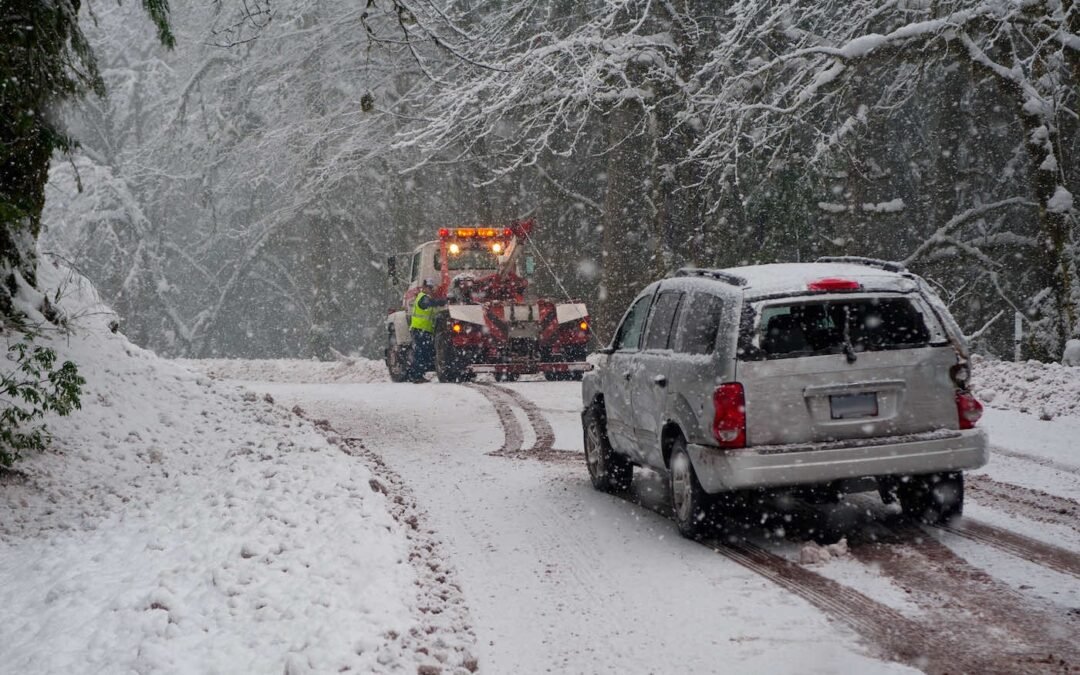
If you’ve tried these steps and you’re still stuck, it’s time to call for professional winch-out service. Continuing to spin your wheels risks damaging your transmission, overheating your engine, or getting even more stuck. Saskatoon towing teams use heavy-duty winches to pull vehicles from ditches, snowbanks, and soft shoulders without causing damage to your undercarriage or suspension.
Signs You Need a Winch-Out (Not Just a Push)
- Your vehicle is stuck in a ditch or off the shoulder
- Snow is packed deep under the chassis
- You’re on an icy slope or embankment
- Your wheels are completely off the ground
- You’ve been stuck for more than 20 minutes
- You’re blocking traffic or in an unsafe location
Professional recovery prevents further damage and gets you back on the road safely. Operators connect to manufacturer-approved tow points and apply controlled pulling force to extract your vehicle without scraping, bending, or stressing drivetrain components.
What to Do While Waiting for a Tow Truck
If you’re stuck and help is on the way, stay calm and stay safe. Turn on your hazard lights to alert other drivers. If it’s freezing outside, stay inside your locked vehicle with the engine running—but crack a window slightly to prevent carbon monoxide buildup. Share your exact location using nearby landmarks, cross streets, or GPS coordinates. Most 24-hour towing services in Saskatoon provide real-time ETA updates, so you’ll know exactly when help arrives.
Prevent Getting Stuck: Winter Driving Tips for Saskatoon
Prevention is easier than recovery. Keep a winter emergency kit in your trunk with a shovel, sand or kitty litter, jumper cables, blankets, and a flashlight. Check your tire tread and consider winter tires for better traction. Avoid sudden stops, sharp turns, and aggressive acceleration on snow-covered roads. If conditions are severe, delay your trip or choose plowed main roads over side streets.
How Much Does Winch-Out Service Cost in Saskatoon?
Winch-out pricing depends on your location, how stuck you are, and the equipment needed. Most services start around $150 for basic recovery, with additional charges for distance, time, or complex extractions. Reputable companies provide upfront quotes before dispatching, so you’ll always know the cost. If your vehicle isn’t drivable after recovery, flatbed towing can transport it safely to your mechanic or home.
Frequently Asked Questions (FAQ)
Can I damage my car trying to get unstuck?
Yes. Spinning your tires aggressively can overheat your transmission, damage your drivetrain, or wear down your tires. If you’re stuck badly, it’s safer to call for professional help than risk costly repairs.
How long does it take for a tow truck to arrive in Saskatoon during winter?
Most towing companies dispatch within 20-30 minutes under normal conditions. During severe storms, wait times may increase to 45-60 minutes due to high call volumes and road conditions.
Will my insurance cover winch-out service?
Many comprehensive auto insurance policies include roadside assistance that covers winching and towing. Check your policy or call your provider. If covered, the towing company can bill your insurer directly.
What’s the difference between a tow and a winch-out?
A winch-out pulls your stuck vehicle back onto the road using a cable and winch. A tow lifts and transports your vehicle to another location. If your car is stuck but drivable, you only need a winch-out. If it’s damaged or won’t start, you’ll need a tow.
Can all-wheel drive vehicles get stuck in snow?
Absolutely. AWD helps with traction, but it doesn’t prevent getting stuck if snow is packed under your vehicle or your tires are on ice. Ground clearance and tire quality matter more than drivetrain type in deep snow.
Should I try to push my car out with help from others?
Pushing can work for light snow situations, but it’s risky. People can slip, get injured, or the car can roll unexpectedly. If you try this, use extreme caution, communicate clearly, and never push from directly in front or behind the vehicle.
Final Thoughts: Stay Safe, Get Help When You Need It
Getting stuck in snow is frustrating, but with the right techniques—or a quick call to a trusted emergency towing service—you’ll be back on the road fast. Whether you choose to rock yourself free or rely on professional winch-out recovery, safety always comes first. Saskatoon’s winter roads are unpredictable, but you’re never alone when you’re stuck. Help is just a phone call away, 24/7, ready to pull you out and get you moving again.
Need help now? Call Saskatoon Towing at (639) 562-9281 for fast, professional winch-out and recovery service.